

Introducing Arthrosamid®
Arthrosamid® is a cutting-edge injectable hydrogel implant that delivers long-lasting, proven pain relief for knee osteoarthritis — improving your quality of life without surgery
Arthrosamid presents a fresh approach to treating knee osteoarthritis, providing patients with a viable option to existing therapies. The treatment employs an inventive non-biodegradable hydrogel technology composed of 97.5% water and 2.5% cross-linked polyacrylamide backbone. Upon injection into the knee joint, Arthrosamid acts as a cushion, assuaging pain and delivering secure and long-lasting relief in a single shot.
Ready for an initial consultation today?
Injections to date
Patient satisfaction
Google Review
“I have carried out over 280 Arthrosamid injections so far, for patients in the UK and travelling over from the US and other parts of the world”
Dr Manas Tiwari
For prices, more information about Arthrosamid and how Glasgow Private Clinic can help you, please scroll down.
Arthrosamid is a type of injection known as an intra-articular polyacrylamide hydrogel (iPAAG) used to alleviate the symptoms of knee osteoarthritis. It works by replenishing the synovial fluid’s thickness, enhancing joint lubrication, and cushioning. Additionally, it creates a cushioning effect by integrating into the synovium of the inner joint capsule.
Arthrosamid acts to cushion the joint, resulting in a reduction in pain, stiffness, and improved movement. The hydrogel is non-degradable, providing long-lasting relief, which can enhance your quality of life. According to clinical trials, patients experienced a considerable reduction in pain symptoms by the fourth week after their injection. Unlike other injectable treatments, this reduction was sustained at the two-year follow-up period.
Arthrosamid is administered through a single injection, under ultrasound, into the knee’s intra-articular cavity by a qualified specialist. Prior to the injection, a local anaesthetic is given to numb the area around the knee, which may cause a slight stinging sensation. Unlike surgery, the injection is a minimally invasive procedure that can be done on an outpatient basis. Before the injection, antibiotics are provided to prevent any potential injection risk.
Several clinical trials of Arthrosamid have not reported any severe hydrogel-related side effects. Mild to moderate injection site pain and swelling were the most frequently reported side effects, which were typically short-lived. The hydrogel’s safety profile has been established over the past two decades, as it has been used for various indications in the body.
- £110 per consultation
- Standard Package
- £2480 for one knee/ £4960 for two knees (if performed at the same time)
- Platinum Package (includes 3 post procedure physio appointments)
- £2680 for one knee/ £5160 for two knees (if performed at the same time)

Dr. Manas Tiwari
Make an appointment
Request our FREE Arthrosamid information pack today

Excellent experience at the immaculate and welcoming Glasgow Private Clinic whilst attending for my recent Arthrosamid treatment. Would highly recommend Dr Manas Tiwari for his knowledge, skill and friendly confidence-giving manner. His patience, humour, and 'no hard sell' attitude were much appreciated.
One knee op (L) and several years of pain later (both knees), I went to the Glasgow Private Clinic and saw Dr Tiwari. Saturday 26.07.25. I was his 250th patient for Arthrosamid treatment. Went in 09:00, left just before 10:30, went about my day, headed to bed and NO pain while sleeping - what!! Can’t remember the last time that happened. A little stiff on Sunday but I walked down the stairs, not the usual hobble. Monday 28.07, a wee bit stiff initially then walked the dog, pain free - just did 90 minutes in the gym on the rehab programme I was given - still no pain. I was getting to the stage of struggling to take the dog a walk - no more, it’s a new lease of life.
I was treated with the utmost professionalism throughout the consultation and procedure. Everything was explained to me and questions were answered thoroughly. An excellent consultant and I would absolutely recommend this clinic. I am now four days post treatment of ARTHROSAMID injection and there is definitely significant improvement already. Far less pain and I will now commence the recommended physio. At this point, I would definitely recommend this treatment. Dr Manas is an excellent Dr. I trusted him completely and would do again.
Had an appointment today to have Arthrosamid injections in both knees due to osteoarthritis. My experience was 1st class from start to finish. Dr Tiwari explained everything as we went along and put me completely at ease. Would highly recommend this clinic to anyone.. Staff are wonderful.
How does the Arthrosamid injection work on the day?
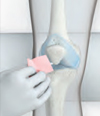
1st Step
The knee is cleaned prior to the Arthrosamid injection
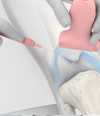
2nd Step
Arthosamid, a hydrogel, is injected into the knee's synovial cavity using ultrasound guidance

3rd Step
Once the injection is complete, the needle is removed
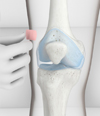
4th Step
A plaster is placed over the injection site to cover it
You are likely to feel some pain relief within 24 hours; however, it can take 4 to 12 weeks to feel the maximum benefit. Clinical data shows that most patients start to feel an effect within a few weeks.
You should avoid any strenuous weight-bearing activities (e.g. running, tennis or long walks) during the first few days after your injection. Your doctor will be able to advise you on how to slowly introduce more activity.
If in the future you require a major surgical or dental procedure, you should tell your treating physician that you have an Arthrosamid® implant in your knee to ensure an accurate medical assessment.
The hydrogel making up the injection will not degrade, and therefore will provide long-lasting relief. So far, most patients have reported a significant reduction in their pain 4 weeks after their injection, and the average level of reduction was maintained at the 3-year follow-up period.